The tobacco industry tries to derail policy implementation and enforcement
Researchers at the Tobacco Control Research Group at the University of Bath examined industry attempts to influence policy post-adoption. They identified five key tactics:
- Tobacco companies use transition periods to preemptively adapt. For example, they may use the time between a regulation passing and coming into force as an opportunity to stockpile products that are not compliant with the new rules.
- Tobacco companies disregard the policy. They may act as if it were non-binding and may continue as before.
- They engage in token implementation. Companies may take superficial actions, such as adding a graphic health warning as a removable sticker to signal adherence while undermining its effectiveness.
- They find work-arounds. Tobacco companies may change product or package designs or move to less-regulated spaces to circumvent regulations.
- They try to influence implementation through intermediaries. Tobacco companies may provide incentives or industry-favorable interpretations of regulations to retailers, hospitality workers, enforcers or other relevant authorities.
The researchers examined how the industry used these tactics to fight a range of tobacco control measures, including smoke-free policies and bans on tobacco advertising, promotion and sponsorship (TAPS), among others.
The tobacco industry’s efforts to undermine smoke-free policies
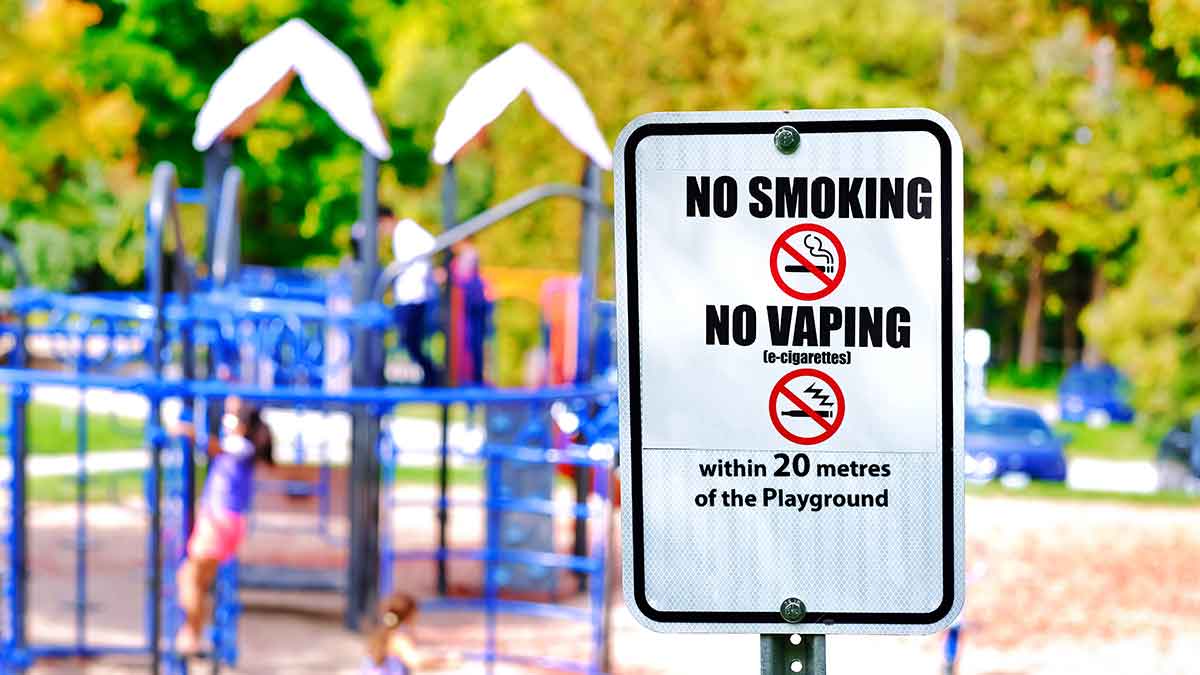
Smoke-free policies can result in almost immediate health benefits for a community, and can increase the number of people who quit smoking and reduce the number of people who start.
The researchers found that intermediary-focused interventions were particularly prominent in the literature on smoke-free policies. In other words, the industry tried to influence how others implemented and enforced smoke-free policies. Researchers also noted product-based circumvention, such as promoting the use of heated tobacco products (HTPs) or e-cigarettes in smoke-free areas.
Example from the field
In Pakistan, schools, hospitals, restaurants and many other public places are smoke-free.
The industry’s promotion of HTPs as alternatives to cigarettes, and the industry’s framing of HTPs as “smoke-free” (which is contested among researchers), is an example of product-based circumvention. This tactic risks confusing implementers about whether HTPs are included in smoke-free policies, and thus whether they can be used in smoke-free places. A 2024 study found that 38% of general public survey respondents were unsure about the legality of HTP use.